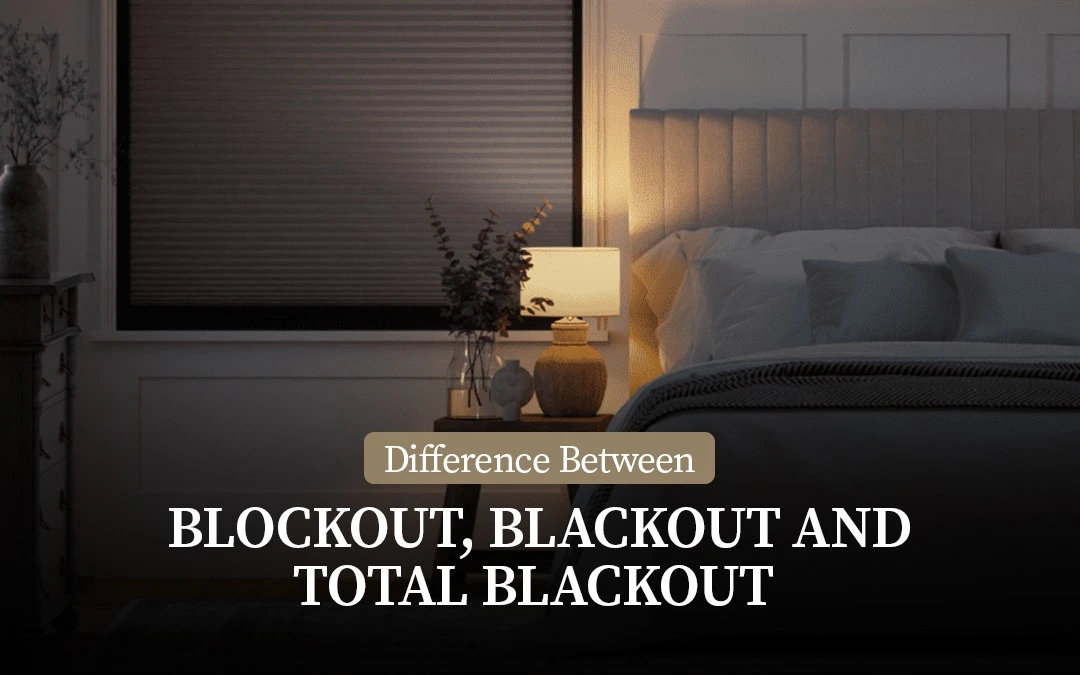
Selecting the right window covering is important, but the terminology surrounding blockout, blackout and total blockout can often be confusing. Although these three are closely related to one another, each one offers different levels of light control due to its fabric and overall window-covering systems. For Australian homeowners, understanding the differences is particularly useful when selecting blinds or curtains for bedrooms, living areas, nurseries or media rooms.
Are Blockout and Blackout the same thing?
Both blockout and blackout are terms commonly used to describe fabrics that help prevent or reduce the entry of light through them. A blockout curtain can highly reduce daylight passing through the fabric when fully closed. However, blocking light through the fabric does not necessarily result in complete darkness. Even a blockout fabric can allow some daylight to enter through gaps around the window covering.
Key points to understand about blockout and blackout:
- Blockout and blackout are often used interchangeably to describe light-blocking fabrics.
- Blockout fabric is designed to prevent light from passing through it.
- Blockout does not automatically mean complete room darkness.
- Light can still enter through gaps around the sides, top and bottom.
- Product specifications can differ between manufacturers, so the fabric’s stated performance should be checked.
- The overall installation matters when maximum light control is required.

Why does light still come through blockout curtains or blackout curtains?
Some of the most common causes for light still coming through are the following:
- Side gaps between the blind and window frame.
- Top gaps above the blind or curtain.
- Bottom gaps beneath the blind.
- Window recess dimensions that affect the fitting.
- Inaccurate measurements that result in unnecessary spaces.
- Installation method and the position of the window covering.
What is Total Blockout?
Total blockout generally refers to a window-covering system that is designed to reduce the light entry as much as possible. Instead of just relying on fabrics, the blockout system uses different features like side channels, tracks or enclosed frames to reduce the overall potential light gaps. It’s best for places that demand maximum darkness and are often times used in areas like bedrooms, nurseries, home theatres and rooms. It is important to note that “total blockout” is not a single universal technical standard and can differ between products.
Where total blockout can be particularly useful:
- Bedrooms where early-morning or daytime light may affect sleep.
- Nurseries where a darker environment may be preferred for daytime rest.
- Home theatres where reducing glare is important.
- Day-sleeping rooms for shift workers.
- Rooms with strong direct sunlight throughout the day.
- Light-sensitive areas where reducing edge leakage is a priority.
Blockout/Blackout vs Total Blockout
The following table shows the difference between blockout/blackout vs total blockout.
| Feature | Blockout / Blackout | Total Blockout |
|---|---|---|
| Fabric light control | Blocks or significantly reduces light through the fabric | Blocks or significantly reduces light through the fabric |
| Edge light | Some light may enter around the edges | Designed to minimise light leakage around the edges |
| Main focus | Light-blocking fabric performance | Overall window light control |
| Installation | Standard blind or curtain installation | May include side channels, tracks or enclosed components |
| Best suited for | Everyday light reduction and privacy | Greater darkness and reduced light leakage |
| Common applications | Bedrooms, living areas and general rooms | Bedrooms, nurseries, home theatres and daytime sleeping areas |
Which option is right for your home?
When it comes to the most suitable light-control blinds or curtains, the requirements of the room and window type play a huge role. Standard blockout blinds and curtains can deliver efficient light reduction and privacy for many Australian homes. If a client’s priority is to minimise daylight as much as possible, it is important to consider both the fabric and the potential for light leakage around the window covering. Some of the things to consider before selecting the window covering are:
- How much darkness is required.
- The room’s primary purpose.
- The direction and exposure of the window.
- The amount of privacy and glare reduction required.
- Whether standard blockout or enhanced light control is more appropriate.
- The importance of professional measuring and installation.
Find the right light control solution with Elain Blinds
Choosing the right light control solution begins with understanding the differences between blockout, blackout and total blockout window coverings. While blockout and blackout generally refer to fabrics designed to limit the amount of light passing through the material, the overall level of light control also depends on the window covering’s design, fit and installation. The most suitable option will also depend on the windows, the purpose of the room and the level of light control required.
At Elain Blinds, our professional advice, accurate measuring and quality installation help ensure that your window coverings are well suited to your home and specific requirements. Whether you are looking for blockout blinds for a bedroom, blackout curtains for improved light control or a total blockout solution to minimise light leakage, we can help you find a suitable option.
Contact Elain Blinds today to arrange your free measure and quote!
FAQ's
Are blockout and blackout the same?
Yes, blockout and blackout are commonly used interchangeably to describe fabrics designed to significantly reduce or prevent light from entering.
Do blockout curtains block all light?
No, blockout curtains do not necessarily block all light from entering a room, but it does prevent it to some extent.
What is total blockout?
Total blockout generally refers to a window-covering system which is designed to minimise the light entering through both the fabric and the surrounding edges.
Are blockout curtains good for bedrooms?
Yes, blockout curtains are a suitable choice for bedrooms because of its ability to reduce daylight, offer privacy and outside visibility.
How can I reduce light around blinds?
You can actively reduce light leakage by choosing measured and professionally installed window coverings, as it minimise gaps around the window.
Are double roller blinds effective for light control?
Yes, double roller blinds can provide a flexible light control system by combining two layers with different levels of light filtering.